Career Arc
From pixels to pipelines.
20 years of building things that work.
I started by obsessing over single pixels in a photography studio — lighting, composition, the science of making products sell. That obsession with precision led me through marketing at industrial plants, into web development, and finally into AI architecture.
My engineering philosophy was forged by necessity. I build systems designed to run autonomously, scale without me, and fail gracefully. Every architecture decision asks one question: "Will this still work when I can't be there?"

Product Photographer
1.3M marketplace sales driven by studio production systems

In-house Marketer
Industrial manufacturing — data-driven campaigns at scale

Web Developer
Founded VKV — New Vision. Vanilla code, Lighthouse 100/100 baseline

AI Architect
Multi-agent orchestration, autonomous pipelines, local LLM fine-tuning
Engineering philosophy
Maximum autonomy. Minimum human-in-the-loop. Systems that run when you can't.
// microservices
The Lab
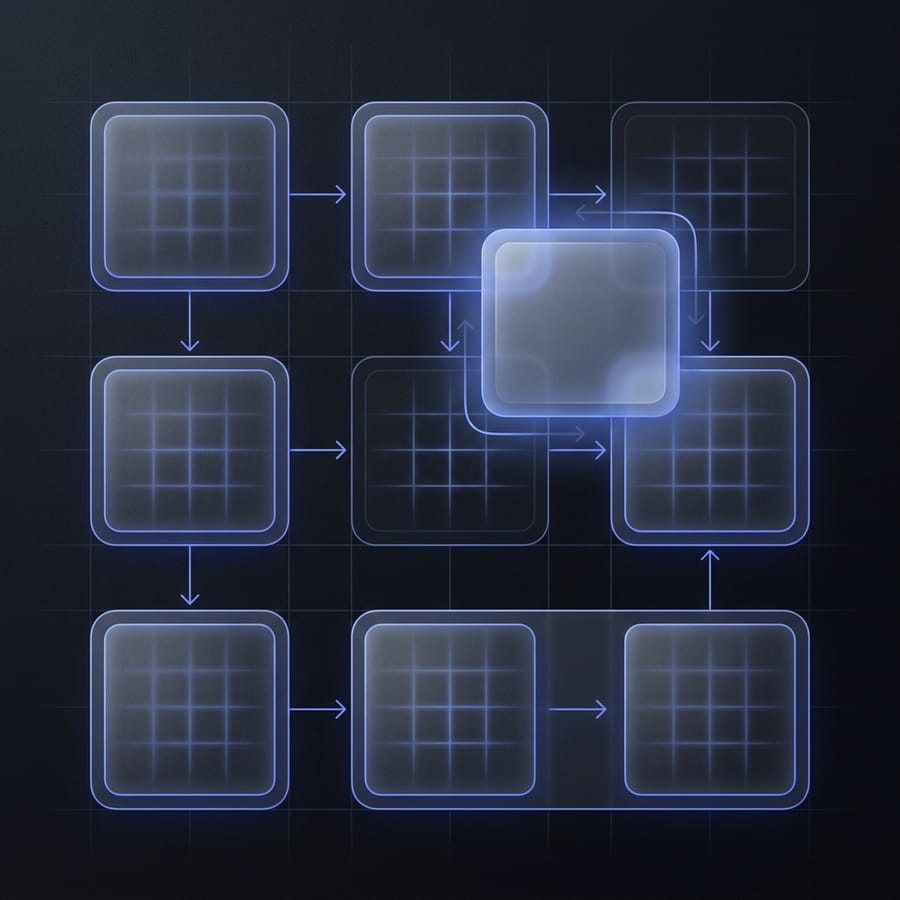
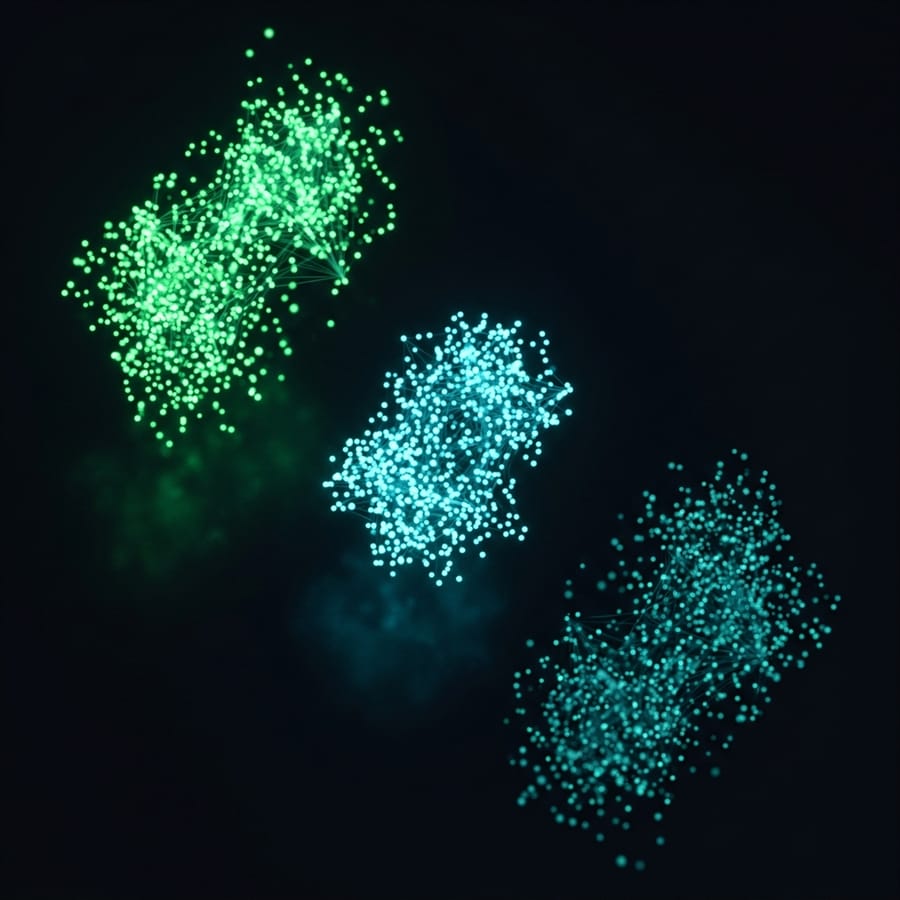
Hands-on AI tools — tokenize text and compose prompts in your browser, and explore embeddings computed on a self-hosted inference server.

// tech stack
The Stack
Carefully chosen. Obsessively optimized.











Questions
What people ask
-
What is Synapse?
Synapse is the AI assistant built into this site. It runs a Gemma 4 E2B model that was fine-tuned with QLoRA on a purpose-written dataset, served from a self-hosted inference server — not in your browser, and not through anyone else's API. It answers about machine learning, cloud AI architecture and engineering, and it is still in training, so it can be wrong about facts.
-
Where does the model actually run?
On a server, through llama.cpp — a four-core ARM machine that answers a typical question in about seven seconds, and follow-up questions in under one because the shared part of the prompt stays cached. The browser only sends the question and renders the answer. Nothing about the model runs on your device.
-
What is the Edge Tokenizer Profiler?
A tool that shows how a language model actually splits your text, and what that costs. It compares token counts, price and context-window usage across 18 models from OpenAI, Google, Anthropic, Meta, DeepSeek, Alibaba, Mistral and Zhipu. Counting happens in your browser where a public tokenizer exists; for models that publish none, the count is either fetched from the provider or clearly labelled as an approximation — it is never guessed silently.
-
What does the Embedding Space Explorer do?
It turns text into vectors with Google EmbeddingGemma on the studio's own server, projects them into a 3D map you can rotate, and lets you search that map by meaning instead of by keyword. It also shows cross-lingual similarity (English and Russian words for the same thing land close together), vector analogies, and how different chunking and retrieval strategies change what comes back — which is the mechanism behind RAG.
-
What is this site built with?
Astro 6 with Svelte 5 islands, plain CSS with no framework, and GSAP for motion. It is a static site on Cloudflare Pages: the pages are HTML files, and JavaScript only loads for the parts that are genuinely interactive. That is why it scores 99 on desktop performance while still carrying a scroll-driven video hero.
-
Who is behind VKVstudio, and is it a real business?
Valery Karpov — a full-stack engineer and AI architect with 20 years of building things that had to work. VKVstudio is a sole proprietorship registered in Armenia with the Ministry of Justice State Register since February 2026, under activity code 62.01.0 (computer programming). It is one person, not an agency — but it is a registered business, and the registration details are on the privacy page.
// contact
Let's Build Something
Have a complex problem that needs a systems thinker? I build things that scale without you.
vkvstudio.com
